Search This Blog

Powered By Blogger
Showing posts with label jam. Show all posts

Sunday, 28 November 2010

Scones with gooseberry jam/ グースベリージャムとスコーン

I know scones are normally for tea time.  However, sometimes scones + cream feels a bit too much for an afternoon treat, i.e. after lunch and before dinner.

So..  why not for brunch, as a part of a meal??


The excuse was that I finally opened the gooseberry jam that I made this summer.
For me, it is a MUST to bake scones when I have this jam.  The sharp tang cuts the richness of the clotted cream, and they go really well together.
I must say I like gooseberry jam as much as strawberry jam to have with scones!


I baked them in "hotel afternoon tea size" - about 4.5 cm.  Dainty.
However, I did not bake in the "hotel afternoon tea style".
My friend Fabien, who heads Brown's Hotel's pastry kitchen says that he always bakes his scones with uncoloured bottom.  He says the key is NOT to over-bake them, so that the centre stays moist.

As much as I like Fabien's melt-in-your-mouth, soft scones, I like mine too, which are golden and crusty (with browned bottom!)
I think it makes a nice contrast of texture when you bite into it.
This is what I love about home baking - do your way & experiment as much as you like.
I even cut out some of the scones in a triangle shape, so that I will have minimum cut-out leftovers - which I know that even Mr Head Pastry Chef (from hotel B) does when he's baking scones at home...


。◎ 。◎ 。◎ 。◎ 。◎

スコーンと言ったら、お茶の時間のおとも...というのがおきまりではありますが、ときにはスコーンとクロテッド・クリームの取り合わせが、ちょっとリッチすぎる、ということもあります。

ということで、我が家ではスコーンをブランチに食べることがよくあり。
食事の一端(しかも、カロリーを消費しやすい朝食)にしてしまえば、なんとなく罪悪感も薄れると言いましょうか。


今回スコーンを焼いたのは、今年の夏作ったグースベリーのジャムを開けたからです。
私はグースベリー・ジャムといったらスコーン、というくらい、この組み合わせが気に入っています^^
グースベリーを合わせると、クロテッド・クリームの濃厚なミルク風味が重くならず、さっぱりと食べられるのです。
イチゴジャムもおいしいけれど、グースベリーのジャムもスコーンと組み合わせる定番にしたいくらいおいしいと思います。


今回は4.5cmほどの抜き型を使用しました。
ホテルのアフタヌーン・ティー並みの大きさです... が、ホテル仕様なのは大きさだけです。
ブラウンズ・ホテルのヘッド・パティシエを務める、友人のファビアンによれば、「スコーンは、底に色目をつけないように焼き上げること。焼き過ぎないことがおいしいスコーンの秘訣」だそうです。

実際ファビアンの作るスコーンは、口の中でとけるような食感で、とっても美味しいのですが...
私のスコーンは、... しっかり焼きます(そして、底までキツネ色 ←)。
外側さっくり、というのが好きなのですね。
家でのお菓子作りは、こういうところが楽しいなーと思います。
やりたい放題(!)で、いろいろと実験したり、試行錯誤を重ねたり。
今回のスコーンは、型抜きもしましたが、邪道にも三角に切ったものもあります。
このほうが、生地に無駄が出ないからです。

... そして、某Bホテルのヘッド・パティシエ氏も、家でスコーンを焼くときには三角に切ることを、私は知っています..


Thursday, 11 November 2010

Quince Jam/ カリンのジャム

Well....
I am looking back about a month ago and writing this post.  Anyway, here we go.

I found some quince in the nearby supermarket.  It was the first time I saw the real, fresh fruit, though I have eaten confectionery and desserts made with quince before.  In Japan, quince is called karin, and is known for its medicinal quality for sore throat.  It is not unusual to find some cough drops that say "with karin extract".

Without really knowing what to do with it, I bought two fruits and went back home.


I didn't know that quince had such a strong smell- I'd say it's like a blend of lemon, peach, apple and honey.  I loved it at the beginning, but after a while, it almost felt too strong..  According to the book I have, it works well as an air freshener.

After going through several recipes and spending time, I finally decided to make a quince jam, simply because this seemed to be the easiest thing to make - well, this was the first attempt to do anything with quince for me, so I played safe.

I read that quince changes colour as you cook.  So, excitedly I took a "before" picture.


And, this is "after"...


Yes, it did change colour, but I think I was expecting something a bit more dramatic- my colleague (now ex-colleague) told me that it would become red, but my quince only turned dull orange.  A bit disappointing.

Maybe if I cooked it long enough, it would turn into what Brits call "quince cheese",  basically pâte de fruit that you serve with cheese.  However, I stopped before that stage- as I think I prefer tasting my quince with a piece of toast, rather than Manchego.  It went down quite well with yoghurt too.

Sadly, before could attempt any other recipes, quince disappeared from the shops...

。o 。o 。o 。o 。o 。o 。


まただいぶ時間が空いてしまいました...
ま、いいや、と。

近所のスーパーで、珍しいものを見つけました。カリンです(英語でQuince、クインス)。
調理したものは食べたことがあったし、写真も見たことがあったけれど、実物を見るのは初めてでした。
旬は短いと聞いていたんので、何に使うとも決めないまま、2個ほど買って帰りました。


買って驚いたのは、その香りです。レモンとモモとリンゴと蜂蜜を足して4で割って、強烈にしたらこうなるんじゃないでしょうか。
最初のうちはいい香り~と言っていたのですが、次第に甘ったるくなってきました。芳香剤になる、と本にあったのも納得です。

何を作ろうか、いろいろと考えたのですが、結局は無難にジャムを作ることにしました。
「カリンは調理中に色が変わる」と読んだので、ビフォー&アフター写真を撮ってみました。こちらが調理前。


そして、こちらが調理後...


たしかに色は変わったけれど、私はもうちょっと劇的な変化を期待していたので(笑)、ちょっとがっかり。リンゴが変色したみたいです...
真っ赤になるって(元)同僚は言ってたのですけど。

イギリスやスペインでは、よくハードチーズと一緒に「クインスチーズ」というものが出てきます。このカリンを煮て、ペクチンの作用で固めたもので、フランスのお菓子pâte de fruit (パット・ド・フリュイ)みたいな感じです。
このジャムも、もう少し煮詰めたら固めになったのかもしれませんが、目的はジャムだったので、ややゆるめで止めました。
トーストのほか、ヨーグルトとも相性◎です。

次は何を作ってろうかなぁ...と思っていたのですが、あっという間にカリンの季節は終わってしまいました。
残念。

Tuesday, 5 October 2010

Remains of summer in a jar / 夏の名残りのジャム

I have been making quite a few jars of jam...


From the far left, gooseberry, nectarine, golden plum, damson, greengage and English plum.
I wish I could say this means I don't have to go to the supermarket to buy any jams - however, that is not the case (we normally buy strawberry jam, which I didn't get around to make much of).

This was my first attempt to cook damson jam.
In my book, it said that the fruit is very tart but develops a spicy flavour as you cook.  I am not sure about the flavour, but well, I do like its deep red colour.


I am quite fond of my golden plum jam, which I already wrote about in an earlier post.  It is quite interesting to see how similar the greengage jam looks- the fresh (uncooked) fruits looked quite different from each other (basically, green and bright yellow).


Jam making is always fun, as it really makes you feel like you are capturing the season in a jar.
Also in my case, I can say I'm not doing patisserie - but instead, I'm preparing something for our breakfast  (makes me feel I am doing something slightly healthier)!
Not sure how long they would last, but surely these bright coloured, flavoursome jams will give us some pleasure on cold and dark winter mornings.

* + * + * + * + * +

今年は夏から秋にかけて、よくジャムを作りました。


左端から、グースベリー、ネクタリン、黄色のプラム、ダムソン(小粒のプラムの一種)、グリーンゲージ(緑のプラム)、イングリッシュプラム、です。
これでもう、お店で買わなくて済む...といいのですけど、お店でも買います(特にイチゴジャム。今年はほとんど作りませんでしたので)。

こちらはダムソンのジャム →
作ったのは初めてです。ダムソンは出回る時期が非常に短く、見つけたらすぐに買わないと、旬を逃してしまいます。
本には「生だととても酸味が強いけれど、煮るとスパイシーな風味になる」とあったのですが...味見しても「?」でした。
ま、色がキレイなので、いいとしましょう。


以前こちらのブログでも書きましたが、黄色のプラムのジャムはなかなか良い出来でした。
面白いのは、火を通すと果物の色が変わってしまうこと。
生だと真っ黄色のプラムと、くすんだ緑色のグリーンゲージなのですが、ジャムにするとほとんど見分けがつかないくらいになってしまいます。


ジャム作りが楽しいのは、旬の味をそのままビンに詰められたような気になれるからでしょうか。
それと、私の場合お菓子じゃなくて朝ゴハンの支度だという言い訳ができる、ということもあります(べつに言い訳しなくていいんですが...)。大義名分というか。

6ビンもあるジャムですが、いつまでもつことでしょう。
いずれにせよ、晩秋や冬の暗い季節に、夏や初秋の果物を再び味わうことができるのは、ちょっと贅沢な楽しみです。


Friday, 10 September 2010

Yello plum jam/ 黄色のプラムジャム

I wrote about my love for plums some time ago.
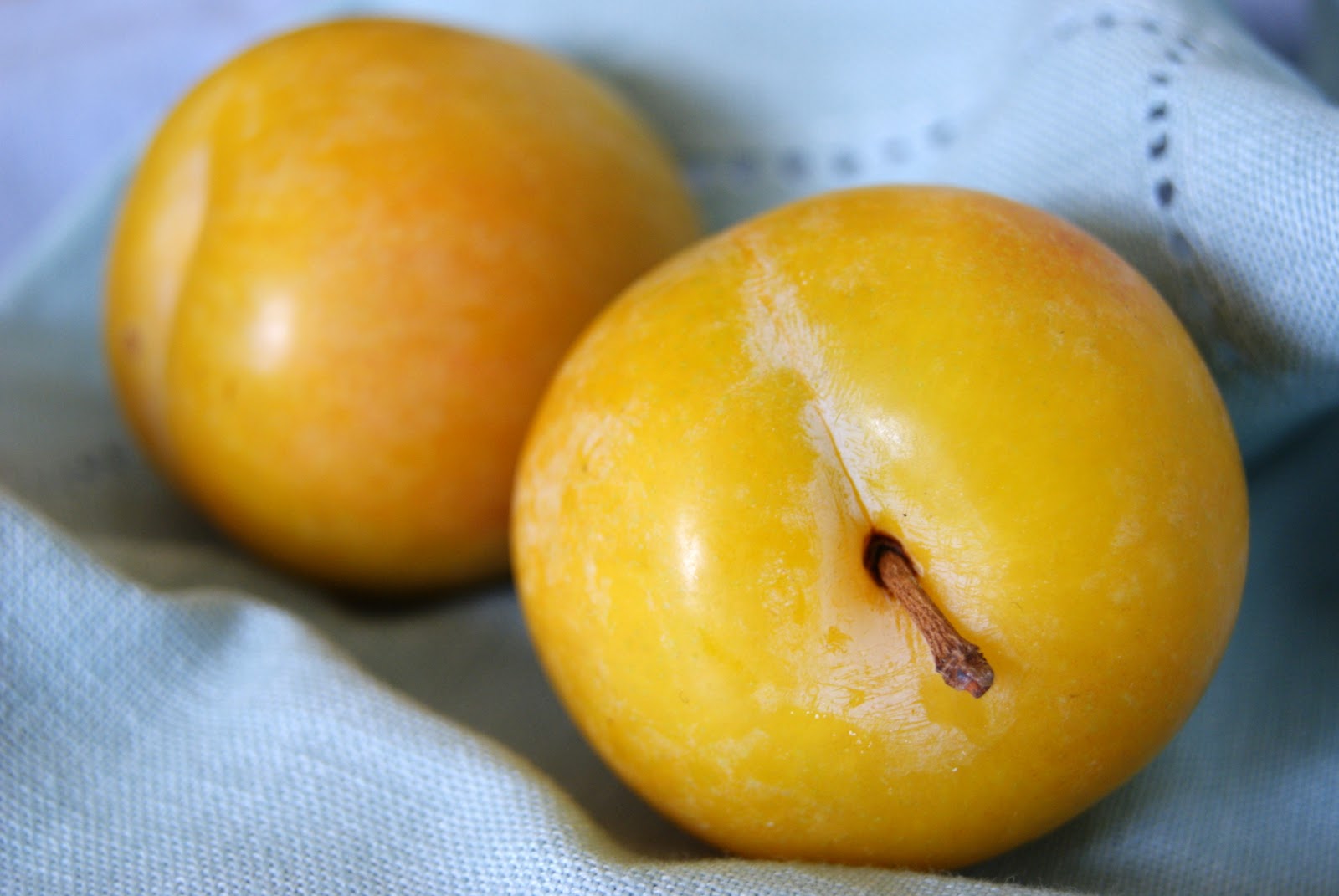
The other day, I came across these bright yellow plums in a supermarket, and bought them.  They were rather on the tangy side than sweet.
To be honest, I think I loved the colour more than the taste.


An idea came to my mind, and I went back to the shop the following day to buy another punnet - to make some golden plum jam.
(Well, the second batch tasted better than the first- so in the end I liked both the colour and the flavour)

I tend to keep my jams rather simple, but am also interested in mixing the fruit with some spices and other ingredients.
This time, I added half a vanilla pod, half a cinnamon stick and a bit of lemon rind.
I think they work very well together (and it is a good way to re-use a vanilla pod after scraping the vanilla beans).


So far we have been having this jam with yoghurt in the morning, but the tang will perhaps go well with scones too.  A big dollop of clotted cream with golden plum jam... a dangerous thought..


◎ ・ ◎ ・ ◎ ・ ◎ ・ ◎ ・ ◎ ・

少し前にプラムについて書きましたが、先日、黄色のプラムを見つけました。
ポルトガルから来たプラムだそうです。
あんまり甘くなくて、かなり酸味の強いプラムでしたが、数日後にはもう1パック、買いに行ってしまいました。
ジャムを作るためです。


赤い果物は、火を通すと色が飛んでしまうことが多いけれど、黄色の果物は明るい黄金色をそのまま保つことがおおいようです。
鮮やかな黄色のジャムが出来上がるんじゃないか、と作ってみたくなったのでした。

大抵ジャムを作るときは、シンプルに仕上げるのですけれど、スパイスを少し入れたりするのも好きです。
今回は、バニラビーンズ1/2本とシナモンスティック、レモンの皮を加えました。
(一度使ったバニラビーンズを取っておいて、再利用すると経済的です。私はバニラの香りが強すぎなくて、”二番だし”のほうが好きなくらい ^^)

出来上がったジャムは、ヨーグルトと一緒に食べています。
酸味がきいているので、たっぷりのクロテッド・クリームと一緒にスコーンに乗せて食べるのもおいしそう。

危険な思想です...。


Saturday, 28 August 2010

The end of summer, beginning of autumn/夏の終わり、秋の始まり


I have kept on buying peaches and strawberries, telling myself that these are the last of this season - since end of July...  Well, finally I did stop buying them, and over the weekend, I bought my last nectarines of the season.
When I buy the "last batch", I often make them into a jam- so that  I can still enjoy the season's flavour, even when the actual fruits are gone from the shelves.  So I made some nectarine conserve this time.


Following my jam recipe book, Jams & Chutneys, I chopped up the nectarines and covered them with sugar over-night.  This way, the fruit gets "cooked" in sugar, and you don't need to cook in heat for a very long time.
I love the refreshing smell of this conserve - it really is like capturing the last bit of summer in a jar.  And the colour is beautiful too.  It reminded me of rose petal jam.

Having said my good-byes to nectarines and peaches, I welcomed greengages and English plums.


I think greengages are my favourite plums.  It is unbelievably green, but so sweet.  I fell in love with this fruit when I was living in Paris.  I must have seen them in the UK too, but they never seem to have caught my attention.  In France, it is called Reine Claude - Queen Claude, which is apparently the name of a Duchess of Brittany from the 16th century (wiki).

These plums make lovely jam too!
I already know that there will be some jars of English plum jam and greengage jam in our cupboard, by the time I start wearing my warm long boots...

* * * * * * * * * *


この季節、これが最後...と思いつつ、何度イチゴと桃を買ったことでしょう。7月の末から、もう旬も終わりだと思いながらも、つい何度も手に取ってしまっていました。
ネクタリンも同じだったのですが、とうとう「ほんとに最後のネクタリン」を先日買いました。
季節最後の果物は、ジャムにしたくなります。
季節が過ぎても、まだその果物を楽しめるからです。
ということで、今回はネクタリンでコンサーブを作りました。


私の持っている Jams & Chutneys という本にしたがって作ったのですが、まず、1cm角に刻んだネクタリンを、砂糖漬けにして一晩置きます。
こうすることで、調理されたのと同じ効果が得られ、実際に火を通す時間を短縮できるのだそうです。実際、作ったコンサーブは、ほんとにフレッシュな香りと味でした。

写真だとちょっとわかりづらいのですが、皮ごと煮たので、ピンクがかった色合いになりました。バラのジャムみたいで綺麗でした。

(註:Conserve は辞書によれば「砂糖や塩漬けなどにして保存できるようにした食品」です。私のレシピ本では、いわゆる「ジャム」 と、砂糖を控え目にした「プリザーブ」と、最初に砂糖漬けにする「コンサーブ」とで、名称を分けているようです)

ネクタリンや桃の季節は終わってしまったけれど、それと同時に、今度は英国産のプラムや、グリーンゲージの季節がやってきました。


グリーンゲージは、写真の緑のプラムです。緑だけれど、これで十分熟しており、とても甘くておいしいプラムです。
初めて食べて感動したのは、パリに住んでいたときのことでした。彼の地では、レーヌ・クロード(クロード王妃)と呼ばれており、話によれば16世紀のブルターニュ公爵夫人の名前からつけられたのだそうです(ウィキより)。

言うまでもなく、これらのプラムで作ったジャムもまた、おいしいのです...

そろそろロングブーツで暖かい格好をして出かけなきゃ、と言い出す頃には、きっと私の戸棚にはまた新たにプラムのジャムが加わっていることでしょう。

Tuesday, 15 June 2010

ネクタリンのジャム/ Nectarine jam

今年最初のネクタリンを買いました。
Home Ripening と書いてある、5個入りのパックです。まだ完熟ではなく、家でしばらくおいておいて、熟させてから食べます。


買って二日ほどしたら、部屋中にネクタリンの香りが漂うようになったので、さっそく食べてみたものの…おいしくない。そのまま芳香剤代わりに置いておきたい気はしたものの…仕方がないので、ジャムにしてしまいました。

ふと思い当って、友人のパティシエ、ファビアンが作る方法で煮ることにしました。火を通す時間を短くして、ペクチンを加えて濃度をつける方法です。
皮つきのまま(ネクタリンを食べるときももちろん皮ごとです)切って、種を除いて計量し、果実の約35パーセントに当たる量のグラニュー糖を加えました。保存目的の場合には50%くらいにしますが、早く消費することを前提で、少なめの砂糖にしました。

煮ているあいだ、ネクタリンの甘酸っぱい香りが部屋いっぱいに広がって、それはそれはいい匂いでした。

皮ごと煮て、少しつぶしたのでちょっと赤っぽい仕上がりです。レモンを少し絞って、味を引き締めました。


たしかに、煮詰めるよりも香りが際立っています。
瓶を持って、深呼吸したいくらい^^
パンに塗ってかじると、口いっぱいに爽やかな香りと味が広がって、幸せ~

我が家式、アロマテラピーでした。

%.%.%.%.%.%.%.%.

I bought some "home ripening" nectarines the other day.  It was the first time this season.


Despite their sweet fragrance..  they weren't very good... disappointingly.  
So, I decided to make them into jam (as I normally do with so-so fruits).

I decided to follow my pâtissier friend Fabien's method this time: to cook for a short time with less sugar, and add pectin to thicken the jam.  
I weighed the fruits, removing the stone (pit?  I never know), and added the sugar, which was about 35% of the weight of nectarines.  I knew I was going to eat the jam within a few days, so did not add much (normally I would add around 50%).  

While cooking, the smell of nectarine that filled the flat was just heavenly...

I had to blitz the jam a bit, as the fruit was quite firm.  To finish, I added a squeeze of lemon.


I could tell that the smell of the jam was fresher than my usual cook-to-105c method.  Holding the jam jar up to my nose and taking a deep breath.. made me smile.  It was great with toast too, perfect for summer breakfast.

I call it aromatherapy à la sakura :)

Monday, 1 February 2010

Apple Jam/ リンゴジャム

I read once that Britain has got 3,000 varieties of apples.  
At supermarkets, however, you won't find that many kinds- nonetheless, most of the apples I see in the UK are not common in Japan: Cox, Braeburn, Spartan, Empire, Royal Gala, Pink Lady, Egremont Russet..  

I think my favourite apple in the UK is Cox.  Although it tends to get soft quickly, I love the flavour.  It's got a nice balance of sweetness and acidity.
The other day, I found that one of the Cox apples that I had recently bought got a bit soft, so decided to make it into apple jam.


As an experiment, I decided to add Egremont Russet too.  Egremont Russet has a skin that almost looks like Japanese pear.

This is how I make my apple jam..  I chopped three apples (2 E.R and 1 Cox), tossed in sugar (half of the weight of apples), squeezed some lemon juice (and add in the lemon too- best if it's organic), and broke a cinnamon stick, and left like that for about 20min.


Water (or apple juice) starts appearing, so you don't need to cover the apples with any extra water.  Then I put the pan on the hob, brought to a boil, reduced heat, and removed the scum that naturally forms on the surface as much as possible.

I cooked until the juice was nearly gone, for about five minutes.   If you like a puree texture, you can mash the flesh with a wooden spoon, but if you like the bits, just like in apple pies, you can leave it like that.  This texture normally depends on what kind of apple you use: both Cox and E.R seem to retain the shape and crunch.  Finally, I removed the lemon and cinnamon stick, and poured it in a sterilised jar.  To sterilise the jar, I washed an empty jar first, then put it into a cold oven, and heated it to 150c and left it for a few minutes.

Using half the weight of apples worth of sugar is not enough to preserve the fruit very long - though this jam will still taste quite sweet.  For this reason, I don't try to keep this jam too long.  It's good with toast, but I think I will enjoy it the most with yoghurt.  Yum.

+=+=+=+=+=+=+=+=+=+=+=+=+=

なんと、イギリスには3000種類ものリンゴがあるそうです。
もっとも、スーパーなどではそんなにたくさんの種類を見かけることはありませんが...。それでも、コックス、ブレーバーン、スパルタン、エンパイヤ、ロイヤル・ガラ、ピンク・レディー、エガモント・ラッセルなど、日本では見かけることも、耳にすることもないリンゴがいろいろあります。

私のお気に入りは、コックス(正確にはCox's Orange Pipin)。買って数日で、実が柔らかくなってしまうのが難点ですが、酸味と甘みのバランスが良くて、緑色と赤の野生的な色合いもかわいらしく、よく食べます。手のひらに収まるほどの小さいものもあり、おやつに食べるのにちょうどいい大きさです。
家に、残念ながら柔らかくなってしまったコックスがあったので、ジャムにすることにしました。
ついでにエガモント・ラセットも入れてしまいます。これは、日本のナシみたいな皮のリンゴで、爽やかな酸味とリンゴらしい香りを持つ品種です。

作り方…というほどのものでもないのですが、こんな感じで作りました。

リンゴはイチョウ切りにし、リンゴの半量にあたる砂糖、レモン半分(絞って、皮をそのまま入れる。無農薬)、シナモンスティック1/2本を折って、全部ナベに入れます。ホウロウびきのものか、ステンレスのものを使ってください。ざっと混ぜて、そのまま20分ほど放置します。


そうすると、リンゴの水分が出てくるので、それをそのまま火にかけます。この上水分を加える必要はありません。
中火で熱するうち、もっと水分が出てきます。アクが浮いてくるので、できるだけすくいながら、沸騰させます。沸騰したら少し火を弱め、水分がほとんどなくなるまで5分ほど煮詰めます。
ピュレ状のジャムが好きなひとは、この時点で実をつぶします(リンゴの種類によっては、勝手に煮崩れますが…)。
レモンとシナモンスティックを取り除いて、殺菌したビンにジャムを移したら出来上がり。
私はビンは、洗剤で洗ったあと、オーブン(余熱無し)に入れてから150度に熱し、数分間入れておきます。

リンゴの半分の量の砂糖というのは、保存の面からいうと、多いとはいえないようです。味は、かなり甘いのですけど。なので、私はあまり長く置いておかず、すぐに食べてしまいます。
トーストにもあいますが、私はヨーグルトと食べるのが好きです。
おいしいですよー

Sunday, 17 January 2010

Madly in love with rhubarb/ 熱愛ルバーブ

Since I started writing this blog, I realised that I have more "obsessions" than I thought...
And rhubarb is definitely one of them.


This is forced rhubarb from Yorkshire, which is grown in the dark- and harvested by candle light.


I used to think that rhubarb was a summer thing (vegetable, strictly speaking).  Then after a while, I realised that there was something called "forced rhubarb" that starts appearing from early spring.  They are pink- not like the summer ones that are slightly red towards the root, and mainly green.

And, there is also ruby-red rhubarb.  Just like asparagus, apparently rhubarb gets green when the stems are exposed to sunlight.  One day, someone found out that rhubarb that grew under the chimney pot left up-side-down was very red, tender, and tasted less acidic.  That is how they came to start growing rhubarb in the dark.

I really really love this rhubarb.  When I see it in the market at the beginning of the season, ..  I HAVE TO HAVE IT.

It is so brightly red that you almost cannot believe that it is a natural colour.  Your disbelief grows even more when you cook it- it becomes electric pink..


This is my home-made forced rhubarb jam- which we enjoy with yoghurt.  It looks like this...  quite spooky.. very inedible-looking, I must say..


BUT, it is really good!!

Great info on forced rhubarb in Yorkshire..  I don't mind paying a premium price for something as special as this.. http://www.bbc.co.uk/food/recipes/mostof_forcedrhubarb.shtml


* * * * * * * * * * * * * * * * * * * *

このブログを始めてから、私には「これがものすごく好き!」というものが、意外と多いことに気づきました…。
ルバーブも、そのひとつです。


これは、ヨークシャー産の促成栽培もののルバーブです。暗闇の中で育ち、蝋燭の光のもと、収穫されるそうです。

ルバーブというのは夏のものだとずっと思っていたのですが、こちらにしばらく住むうち、春先に促成栽培されたものが出回ることを知りました。夏のルバーブは、根元がちょっと赤っぽいけれど、ほとんど緑色です。それに対し、春先のルバーブは綺麗なピンク色をしています。なぜか、大抵オランダからの輸入です。

夏の緑のルバーブ、春のピンクのルバーブに加えて、さらにはこの真っ赤な冬のルバーブというのがあるのです。アスパラガスやモヤシのように、ルバーブも日が当たると緑になってしまうのだとか(赤の強い品種もあるそうですが)。
あるとき、煙突のてっぺんにのっけるポット(植木鉢みたいな形のものです)をひっくり返したままになっていたところから、真っ赤なルバーブが生えているのを、ある農家の人が見つけたのがそもそもの始まりだとか。
赤いルバーブは、緑のものよりもやわらかく、酸味も少なかったため、闇の中でルバーブを栽培することを思い立ったのだということです。

私はこのルバーブがとにかく好きで…。
季節の初め、マーケットなどでこのルバーブを見ると、もうたまりません。買わずにはいられない...。

この赤さ、本当に自然の色とは思えないほどの鮮やかさです。火を通した日には、もっと不自然な色になってしまいます。こんな感じ。


自家製ルバーブジャムです。
ヨーグルトと食べます。きれいなんだけど…かなり不気味か。
おいしいんですけどね。

英語ですが、促成ルバーブに興味のある方はこちらを ↓↓